
01 / The word waist
What “waist” can mean
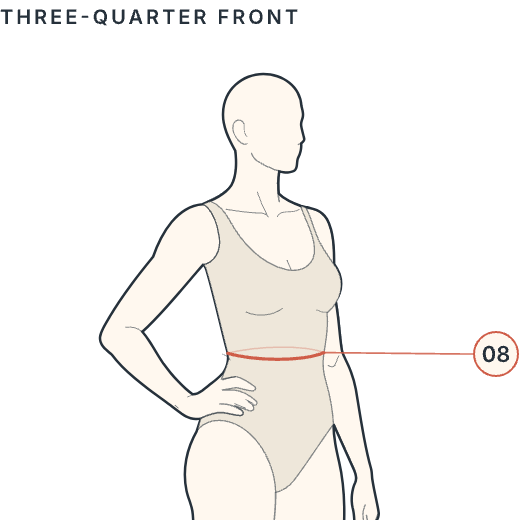
The same word does different jobs. In apparel standards, the waist is a side landmark. In styling content, it often means the narrowest visible point. In garment fitting, it can mean where a waistband sits. In health research, it belongs to a separate protocol. These are not interchangeable, even when they land close together on the same body.
Natural waist / side waist
Apparel fitting and pattern work
- Possible placement
- The side point between the lowest rib and the highest point of the pelvic bone, found by bending to the side.
- Not the same as
- A health waist protocol or a trouser waistband position.
Narrowest point
Consumer styling self-checks
- Possible placement
- The narrowest visible line from the front. It may sit at a different height from the side waist point.
- Not the same as
- The ASTM side waist landmark or a garment waistband.
Preferred waist / waistband
Where a skirt or trouser waistband sits
- Possible placement
- A wearer preference or garment position, not a body circumference.
- Not the same as
- Body waist girth.
Health waist circumference
Health-risk research
- Possible placement
- Defined by a separate health protocol with its own landmark and procedure.
- Not the same as
- Apparel sizing, styling labels or Bodytype thresholds.
The question is not which word is correct in every context. The useful question is which landmark a source used, and whether the reading you are comparing used the same one.
02 / Standards
The standard view: ASTM D5219-25
ASTM D5219-25 is a terminology standard for body dimensions used in apparel sizing. It defines terms, landmarks, tape paths and a default measuring procedure. It does not define apple, pear, hourglass, rectangle or inverted triangle, and it does not set Bodytype's ratio thresholds.
In the default procedure, the person stands erect and relaxed, without shoes, with weight evenly on both feet about 15 cm (6 in) apart, over usual undergarments, breathing normally (3.3). The tape stays level and snug without compressing the skin. These are standard terms and procedure notes, not a claim that one tape reading can identify a styling label.
Apparel body-dimension terminology
ASTM D5219-25, 3.3–3.5
- Waist
- Side waist point between the lowest rib and the highest point of the pelvic bone, found by bending to the side; girth at that level (3.4–3.5).
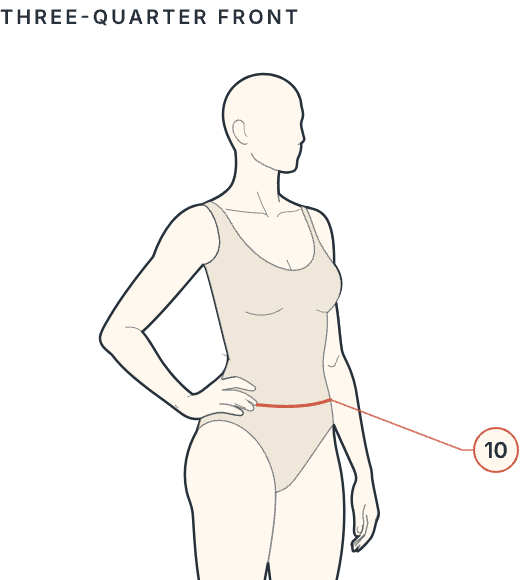
- High hip
- A level between the waist and hip/seat at a distance specified in a size table; if none is specified, the default is midway between them (3.4–3.5).
- Procedure
- Erect and relaxed, without shoes, weight evenly on both feet about 15 cm (6 in) apart, usual undergarments, relaxed breathing; tape level and snug without compressing the skin (3.3).
- Can support
- Terms, landmarks, tape paths and the default measuring procedure.
- Cannot support
- Five styling labels, ratio thresholds or health risk.
Project PDF and transcription checked; recheck the current edition before publication.
Apparel anthropometric definitions
ISO 8559-1:2017
- Waist
- The official scope confirms anthropometric definitions for body measurement; clause-level waist wording was not verified for this guide.
- High hip
- Not verified at clause level, so this guide does not assert a position from this standard.
- Procedure
- Not verified at clause level.
- Can support
- Confirms that the standard is about measurement definitions.
- Cannot support
- Five consumer labels, Bodytype thresholds, or a claim that its waist wording is identical to ASTM.
Official scope page checked; clause text not reviewed.
Chinese apparel body-measurement standard
GB/T 16160-2017
- Waist
- The official record confirms a standard for body measurement definitions and methods; clause-level waist wording was not verified for this guide.
- High hip
- Not verified at clause level, so this guide does not assert a position from this standard.
- Procedure
- Not verified at clause level.
- Can support
- Confirms that the standard addresses measurement definitions and methods.
- Cannot support
- Five consumer labels, Bodytype thresholds, or a claim of identical wording with ASTM or ISO.
Official record checked; clause text not reviewed.
Self-measurement and styling content
Consumer styling guides
- Waist
- Often the narrowest visible point or a 'natural waist'; the exact wording varies by page.
- High hip
- Often a fixed distance below the waist or the fullest part of the lower abdomen; it is not one shared level.
- Procedure
- Usually stand naturally and keep the tape snug but not tight; details vary by page.
- Can support
- Everyday wording and common self-measurement practices.
- Cannot support
- A shared measurement protocol, population data or interchangeable labels.
Project research summaries checked; recheck each page before publication.
Pattern fitting and garment construction
Pattern and sewing guides
- Waist
- May use a natural waist or a pattern-defined level; this can differ from the body side-waist point.
- High hip
- May use a fixed drop below the waist, the fullest abdominal point or a pattern-specific line; full hip is measured separately.
- Procedure
- Emphasises body measurements versus garment ease; the exact steps vary by guide.
- Can support
- Explains why high hip is not a synonym for full hip.
- Cannot support
- A single universal high-hip level or medical waist guidance.
Project research summaries checked; recheck each page before publication.
Health-risk research
Health waist protocols
- Waist
- Defined by the relevant health protocol; it is not the apparel waist landmark used by this calculator.
- High hip
- Not applicable to this guide.
- Procedure
- Protocol-specific.
- Can support
- Shows that health waist measurement has its own context and rules.
- Cannot support
- Styling labels, garment sizing or Bodytype thresholds.
Boundary note only; not used in the calculator.
The ISO and GB/T rows only claim what their official scope or record supports. Clause-level waist wording was not verified for this guide, so no position is attributed to those standards.
03 / Guides compared
How consumer and pattern guides differ
Consumer styling guides often describe the waist as the narrowest point and place high hip a few inches below it, or near the fullest part of the lower abdomen. The exact wording changes from page to page. Some also allow a shoulder or bust input in a formula, which shows that the page is serving a quick self-check rather than a shared measurement protocol.
Pattern and sewing guides tend to keep body measurements separate from garment ease. Threads, for example, distinguishes high hip from full hip and notes that high hip can read larger than full hip on some bodies. Sewing.org separates body measurements from garment measurements. Those are useful operational distinctions, but they still do not make every guide's high-hip line identical.
Consumer formulas can also use their own editing rules. One page reviewed for this guide uses a 5% bust-to-hip balance and a waist at least 25% smaller than the bust or hips. Those numbers belong to that page, not to an industry standard. An extension guide reviewed here also sets its own label boundaries. The same label can therefore describe a different calculation elsewhere.
See the consumer and pattern sources for the pages reviewed. Recheck them before treating a specific wording as current.
04 / High hip
High hip is not a fixed distance
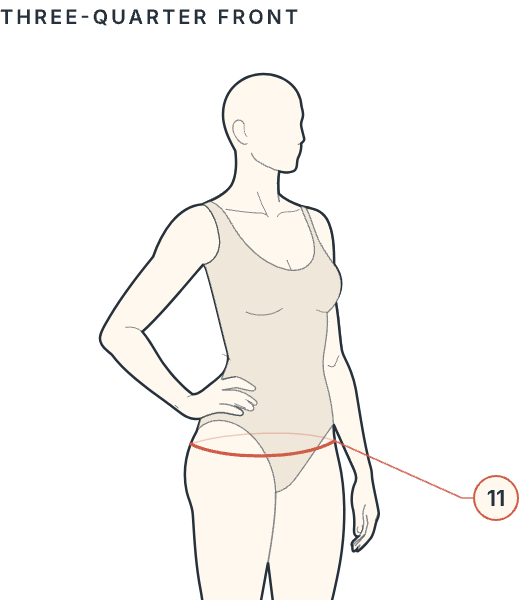
ASTM's high hip is a level between the waist and hip/seat at a distance specified in a size table. When no distance is specified, the default is the midpoint between those two levels. The midpoint is a default rule, not a universal body fact. A size table that specifies another distance is describing a different line.
The top of the hip bone is a different landmark.
High hip is also not another name for full hip. Measure each at its own level, keep the tape level, and do not silently replace a reading because it looks unexpected.
If high hip reads larger than full hip, check the tape height and measure again. Record the reading you actually obtained. Bodytype will still use the value you enter and will show a position-check prompt; it does not guess which number is right.
05 / Comparison
Compare like with like
Before comparing two calculators, two size charts or two sets of instructions, compare their definitions first. A difference in the number is not a difference in accuracy until the inputs match.
Find the waist definition
Ask whether the source uses a side waist point, the narrowest point, the navel level or a health protocol.
Find the high-hip definition
Ask whether it is a fixed drop, a midpoint between waist and hip/seat, the fullest abdominal point or another pattern line.
Check the procedure
Compare units, rounding, clothing, posture, foot position, breathing and tape tension.
Compare definitions before numbers
Only compare readings when the definitions and units match. Otherwise compare the definitions, not a ranking.
Remeasure near a boundary
If a result sits close to a threshold, take a second reading before treating the label as stable.
06 / Bodytype
What this means for Bodytype
Bodytype v2 uses four circumference inputs: bust, waist, high hip and hips. The tape positions follow the terms and default procedure in ASTM D5219-25 sections 3.3–3.5. The five labels, three ratios and fixed thresholds are Bodytype's own styling rules, not an ASTM classification.
The waist used here is a garment-measurement landmark, not a health-risk waist measurement. The calculator does not use shoulder width, height, weight, age, photos or a trained model. When a result sits near a threshold, the page names the neighbouring pattern and asks you to remeasure rather than presenting a probability or an accuracy score.
Related: the five Bodytype labels, the rule order, how close those thresholds are and the method and limits.
07 / Disclosure
Ten points a measurement page should disclose
If a calculator or guide does not answer these ten points, its number may not be comparable with another source. The list is a practical check, not a certification.
The body landmark for every circumference
The same word can point to different places and produce a different reading.
Waist: the side point between the lowest rib and the highest point of the pelvic bone.
The tape path and level
A tape that tilts or twists measures a different line.
Keep the tape horizontal around the torso.
Posture and foot position
Hip and waist readings can change with stance.
Stand relaxed with your feet about 15 cm (6 in) apart.
Clothing and undergarments
A thick layer adds to the reading.
Measure over usual underwear or thin clothing.
Breathing state
Holding the breath changes the waist reading.
Read after a normal breath out; do not hold your breath.
Tape tension
A tight tape measures compression, not the body.
Snug enough to stay in place, without compressing the skin.
The high-hip definition
A fixed drop and a midpoint are not the same line.
Midway between the waist and hip/seat levels unless a size table states otherwise.
Units and rounding
Inches and centimetres, and intermediate rounding, can move a boundary result.
Enter centimetres or inches; no intermediate rounding.
Body size versus garment size
A waistband or garment circumference is not a body measurement.
Do not use garment waistband measurements as body measurements.
Label and threshold source
A measurement standard does not automatically define styling labels.
The five labels and ratio thresholds are Bodytype styling rules, not an ASTM classification.
08 / Method and sources
Method, sources and limits
Method
This is a targeted comparison, not a systematic review. Sources were separated into apparel standards, measurement definitions, consumer and pattern guidance, and Bodytype's own rules. A source is used only for the level of claim it can support.
Limitations
- Consumer and pattern pages can change; the links below need to be rechecked before publication.
- ISO 8559-1 and GB/T 16160 clause-level wording was not verified, so this guide does not attribute a specific waist position to them.
- This guide contains no population measurement study and cannot rank definitions by accuracy.
- A tape reading is affected by landmark, posture, clothing, breathing and tension; a boundary result should be remeasured.
Sources
- ASTM D5219-25Source
ASTM D5219-25, Standard Terminology Relating to Body Dimensions for Apparel Sizing, sections 3.2–3.6.
Use: Waist, high hip and hip/seat landmarks; default measuring procedure.
Status: Project PDF and transcription checked; recheck the current edition before publication.
- ISO 8559-1:2017Source
ISO 8559-1:2017, Size designation of clothes — Part 1: Anthropometric definitions for body measurement.
Use: Scope of the measurement-definition standard.
Status: Official scope page checked; clause-level text not reviewed.
- GB/T 16160-2017Source
GB/T 16160-2017, 服装用人体测量的尺寸定义与方法.
Use: Official record and scope of the Chinese measurement standard.
Status: Official record checked; clause-level text not reviewed.
- The Concept WardrobeSource
The Concept Wardrobe, Determine Your Body Shape(s).
Use: Consumer measurement wording and common styling advice.
Status: Project research summary checked; recheck the page before publication.
- Who What Wear UKSource
Who What Wear UK, What Body Shape Am I?
Use: Example of page-specific editing rules; not an industry standard.
Status: Project research summary checked; recheck the page before publication.
- ThreadsSource
Threads, Learn All About Self Fitting Pants.
Use: High hip versus full hip; high hip can read larger than full hip.
Status: Project research summary checked; recheck the page before publication.
- Sewing.orgSource
Sewing.org, Guide to Taking Body Measurements.
Use: Pattern and sewing context; body measurements versus garment measurements.
Status: Project research summary checked; recheck the page before publication.
- University of KentuckySource
University of Kentucky Cooperative Extension, How Do You See Your Body?
Use: Example of differing consumer label boundaries.
Status: Project research summary checked; recheck the PDF before publication.
- Bodytype methodRead
Bodytype, How the body type calculator works.
Use: Bodytype rule order, thresholds and limits.
Status: Current site implementation.
- Bodytype measurement guideRead
Bodytype, How to measure for a body type calculator.
Use: Tape positions and the ASTM standards note.
Status: Current site implementation.
Last updated 16 November 2026. The date changes only when the content is revised, not when the site is deployed.
Cite this page
A stable reference for the definitions
Bodytype.org. (2026). Where the waist sits: waist and high hip definitions for a body type calculator. https://bodytype.org/guides/waist-and-high-hip-definitions